The Work of Wonder
“The works of the LORD are great, studied by all who delight in them.”
— Psalm 111:2
There is a particular kind of learning that begins before a lesson.
It begins with noticing.
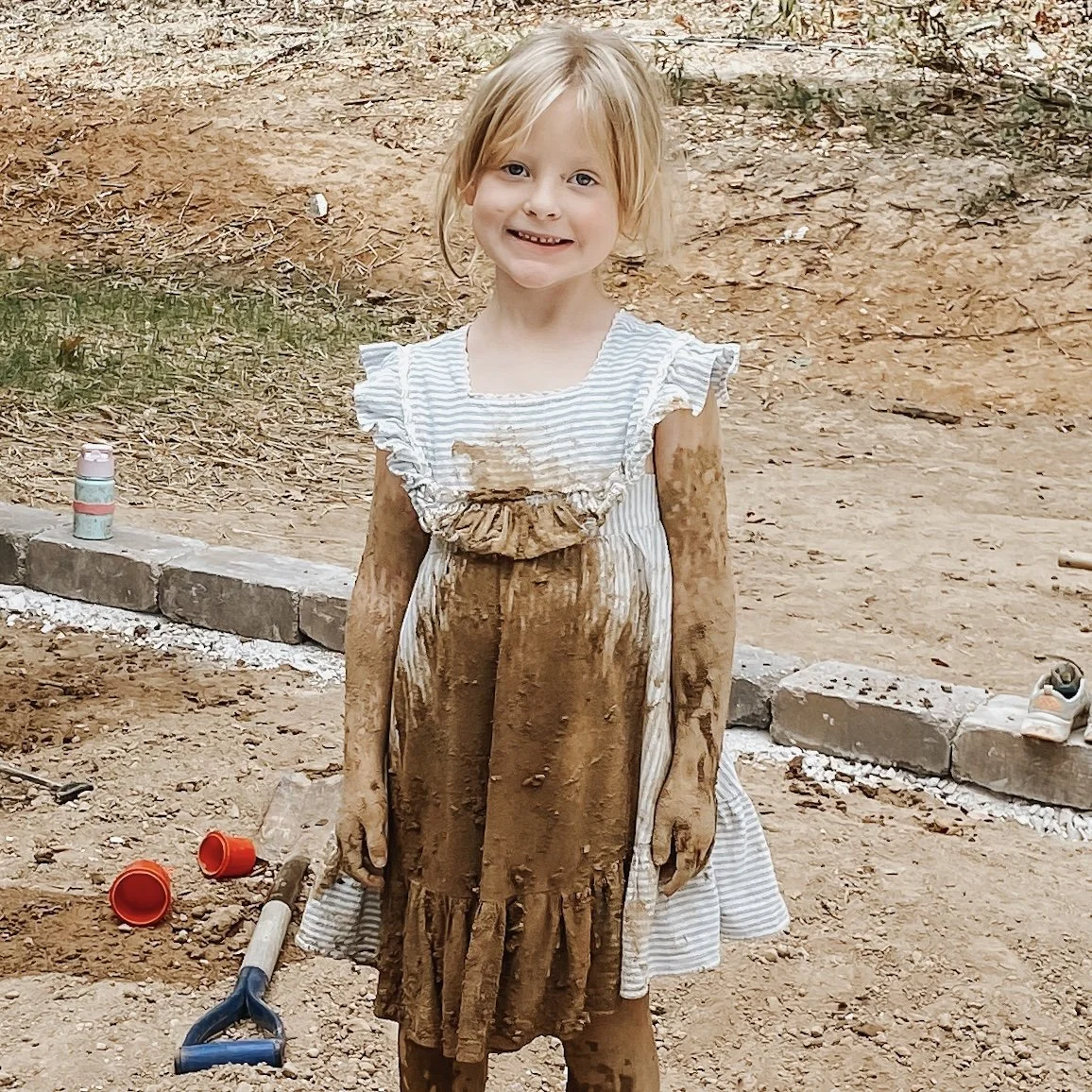
A child stops beside a patch of moss because it is greener than the grass. She watches an ant carry something much larger than itself. She asks why the moon follows the car home. She finds a feather and turns it over in her hand.
No one has told her that this is important.
She simply wants to know.
We often call this wonder.
And perhaps we should be careful not to outgrow it.
The world God made is not ordinary merely because we have seen it before. A familiar thing can remain worthy of attention. The same tree can be studied year after year. The same passage of Scripture can be read again. A book can be returned to and found to say something new—not because the words have changed, but because we have.
“The works of the LORD are great, studied by all who delight in them.”
There is something beautiful in the joining of those two ideas: studied and delighted in.
God does not ask us to choose between knowledge and wonder.
We can learn because we are delighted.
And we can delight because there is something worth knowing.
This is one reason I have become increasingly convinced that education should not be hurried.
A child needs time to look.
Time to listen.
Time to handle the thing itself.
Time to ask a question that may not have an immediate answer.
Time to encounter an idea and carry it around for a while.
Charlotte Mason understood this kind of education well. She believed children should meet living ideas through worthy books, nature, art, history, and the world around them—not merely receive information broken into small pieces for easy consumption.
There is a difference between knowing about something and knowing it.
A child may memorize the parts of a flower and still fail to notice a flower growing beside the path.
She may know the definition of a bird but never learn to recognize its call.
She may complete a lesson about trees and never sit beneath one long enough to wonder how old it might be.
Information has its place.
But education should give us more than information.
It should teach us to attend.
Perhaps this is why making matters, too.
There is a particular kind of knowledge that comes through the hands.
A child who folds a piece of paper carefully begins to understand proportion. A child who plants a seed learns something about patience that cannot be completely conveyed through explanation. A child who makes a useful object discovers that materials have properties, that mistakes can be corrected, and that good work often requires beginning again.
The hands become teachers.
And so does the world.
We do not need to manufacture wonder for children.
We need, perhaps, to protect their capacity for it.
This can mean giving fewer things and more time.
Fewer answers and better questions.
Fewer distractions and more opportunities to attend.
A walk without an agenda.
A book read slowly.
A conversation allowed to wander.
A piece of paper placed on the table with permission to make something from it.
A garden visited often enough to notice what has changed.
These things appear small.
But a life is largely made of small things.
And perhaps the work of wonder is not really the work of creating amazement.
It is the work of becoming attentive to what is already there.
This matters for adults, too.
It is easy to imagine that wonder belongs primarily to childhood.
But Scripture gives us a different picture.
The psalmist looks at the heavens and asks,
“What is man that you are mindful of him, and the son of man that you care for him?”
He is not merely gathering information about the heavens.
He is seeing something about God—and something about himself.
Wonder becomes a doorway into worship.
The more carefully we look at what God has made, the more clearly we begin to see that we are not the center of it.
There is a world outside ourselves.
There is a Maker.
There is truth that existed before our opinions and will remain after them.
And there is great freedom in remembering this.
Perhaps this is why I want Old Fox Hollow to remain a place where we make room for wonder.
In books.
In the things we make with our hands.
In the questions children ask.
In the garden.
In the ordinary work of a home.
In the stories we preserve.
In the beauty we almost missed because we were moving too quickly.
These are small things.
But they are not insignificant.
They teach us to look again.
To listen longer.
To receive what is in front of us.
To remember that the world is not ours to invent.
It is God's.
And there is still so much to learn.
So perhaps the work of wonder is simply this:
To keep looking.
To keep learning.
To remain teachable.
And to delight in the works of the Lord.
Because there is always more to see.